Every first tattoo involves three decisions, and most regrets come from rushing exactly one of them. The design seems like the main event, but scale and placement decide whether that design still reads clearly in fifteen years, and pain, the thing first-timers worry about most, is honestly the smallest of the three problems. This walkthrough goes in the order a good consultation does, so you can arrive at a Charlotte studio with the thinking already done.
Bring references. Artists would rather see five images of what you like than hear a paragraph of description, because style words mean different things to different people.
- Choose the design, then size it up. Detail needs room. Fine lines spread slightly as skin ages, so a design crammed with tiny detail at coin size will blur into itself over the years. The reliable rule: pick the design, then let the artist tell you the smallest size at which it will age well. That size is almost always a little bigger than you pictured, and trusting it is the cheapest longevity decision you will make.
- Match placement to your life. Consider sun exposure, since ultraviolet light is the main long-term enemy of ink; workplace visibility, since a forearm and an ankle live different professional lives; and skin change, since areas over joints and areas that stretch move the design most. A first piece on a flat, low-stretch area gives the artist the easiest canvas and you the most predictable result.
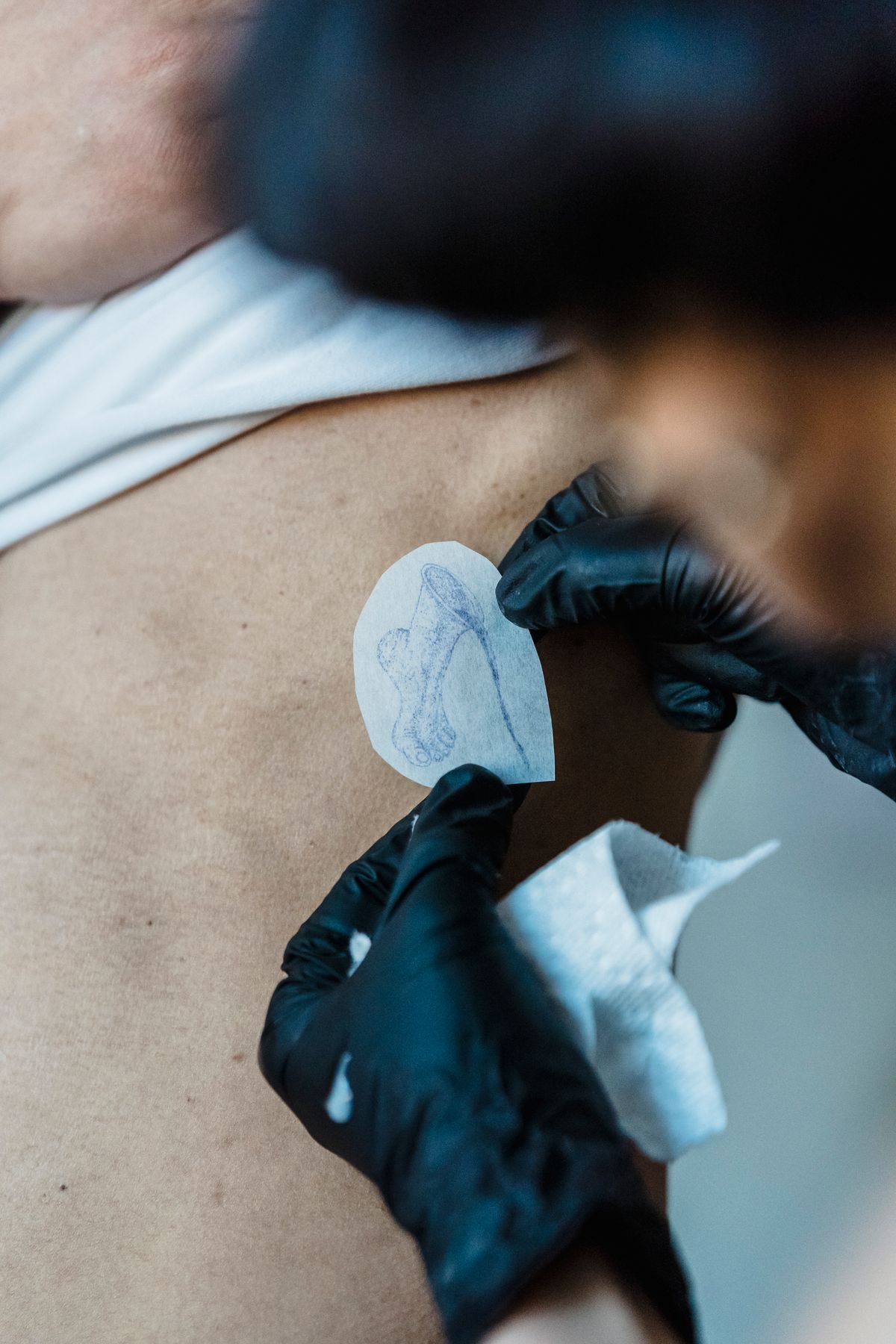
- Check the stencil on your actual body. The stencil goes on before any ink, and this is your moment. Look at it standing naturally, not twisted toward the mirror. Check how it sits when the limb moves, since a design that wraps oddly in motion will bother you daily. Speak now; moving a stencil costs nothing, moving a finished tattoo is a cover-up.
- Eat, hydrate, and arrive rested. A normal meal an hour or two before, water during the day, and a real night of sleep measurably improve how a session feels and how you sit through it. Alcohol the night before is the classic error: it thins the blood, worsens bleeding during the session, and makes the morning after worse in every respect.
- Sit through the session in sections. Most people find the first minutes the sharpest, then settle as adrenaline and endorphins arrive. Sensation varies by area and builds over a long session, so a large first piece is better split into appointments than endured. Tell the artist if you feel faint or need a break; studios plan for it, and pushing through lightheadedness helps nobody.
- Leave wrapped, and follow the aftercare you are given. The first two weeks of healing decide how the piece settles. Your artist's specific instructions outrank any general advice, including this page, because they know the work they just did and how it was wrapped.
Pain, honestly and in general
Descriptions of tattoo pain range from a cat scratch to a sunburn being rubbed, and the variation is mostly placement. Areas with thin skin over bone, the ribs, spine, tops of feet, and the inner bicep, rank among the most sensitive for most people. Fleshy, muscular areas, the outer upper arm, forearm, calf, and upper back, rank among the least, which is one reason the outer upper arm is such a common first placement. Two honest qualifications: individual sensitivity varies enough that rankings are tendencies, not promises, and pain that is manageable at minute ten is a different negotiation at hour three. Design your first piece for the session length you can sit well, not the one you can survive.
Design choices that age with you
Bold lines and adequate spacing are the classic longevity formula, because ink spreads subtly over decades and designs with room to spread stay legible. Names and text need size more than most designs, since lettering that is crisp at an inch tall can close up as it ages. Trends cycle fast and skin does not, so a design chosen because it means something to you outlasts one chosen from a current feed. None of this should talk you out of a fine, small, or trendy piece. It should make the choice a considered one, which is the entire job of a consultation at a shop like Hidden Dagger Tattoo before anyone picks up a machine.
Common questions
How much will my first tattoo hurt?
Most people describe it as a persistent scratching or sunburn sensation, worst over bone and thin skin, mildest on the outer arm and calf. It is uncomfortable rather than unbearable, and it eases once the session settles in.
What is the best spot for a first tattoo?
The outer upper arm and forearm are the usual recommendations: relatively low sensitivity, flat skin that ages predictably, and easy to show or cover. Ribs and feet are poor first canvases on every count.
Can I bring my own design exactly as drawn?
Bring it, and expect the artist to adapt it. Drawings often need line weights thickened and details spaced to work as a tattoo at a given size, and that adaptation is expertise you are paying for.
Photos in this guide are representative stock images.
← All guides from Hidden Dagger Tattoo← Back to Hidden Dagger Tattoo